Beautiful Northern Lights Destinations: 11 Epic Places to Spot the Aurora Borealis
Dreaming of spotting the Northern Lights? Read on to discover how you can do just that.
If you’ve landed on this article, it’s likely that spotting the Northern Lights is on your bucket list. And, if not, why not? The majestic phenomenon has absolutely obliterated our social media feeds in recent years, so it’s no surprise that you’re wanting to see these magical streaks of colour with your own eyes.
But, due to the scientific reason behind their existence (more on that in a mo), it’s not as easy as getting yourself somewhere dark and hoping for the best. Don’t worry though, we’ve got the lowdown on how you can snap that all-important Aurora Borealis photo for yourself.
What Are the Northern Lights?
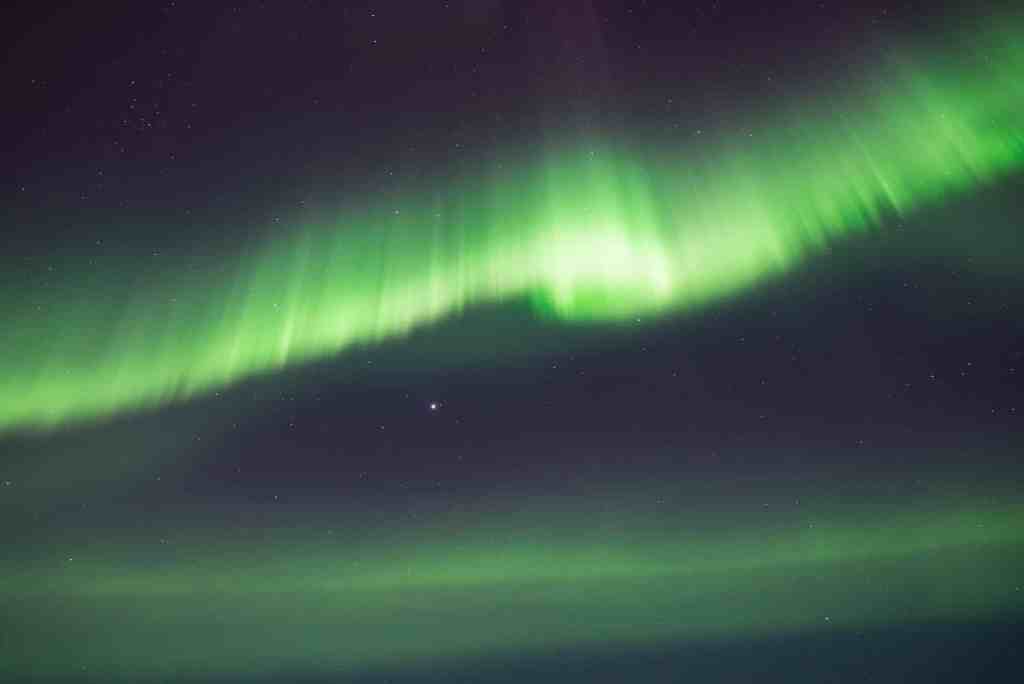
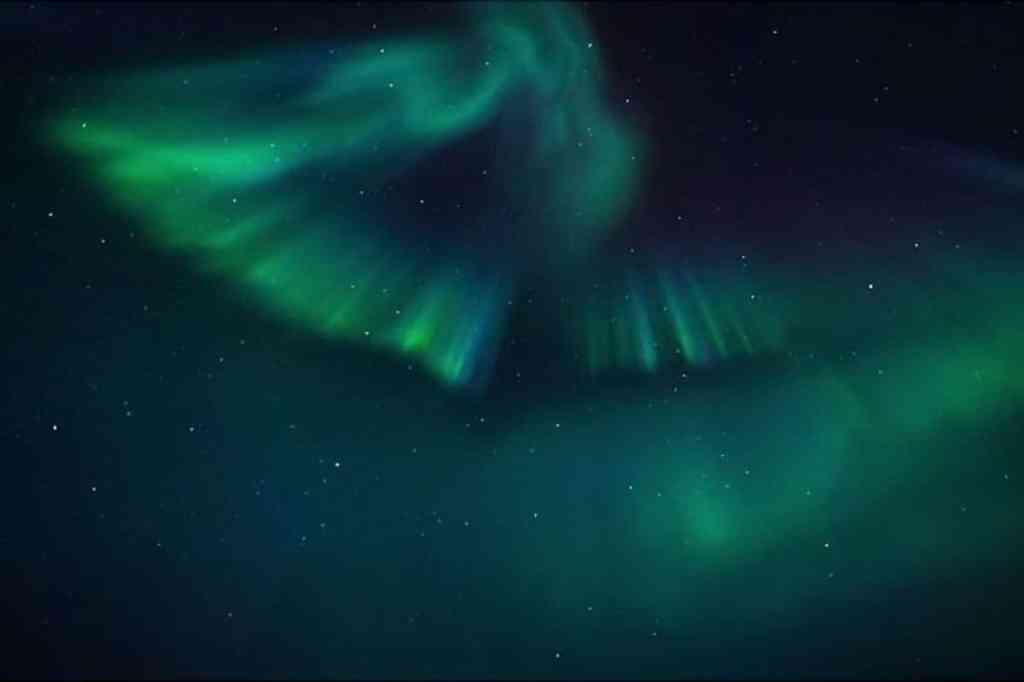
You’ll have no doubt seen a picture of the Northern Lights – or the Aurora Borealis, to give it its official name. The phenomenon results in a kaleidoscope of colours illuminating the dark sky in the winter months.
Want the nerdy details? The Northern Lights are charged particles ejected from the sun that react by emitting colourful light when they collide with Earth’s magnetic field. They can only be seen in the northern hemisphere, which limits your options slightly. Though there are still plenty of places to spot them.
Best Time of Year to See the Northern Lights
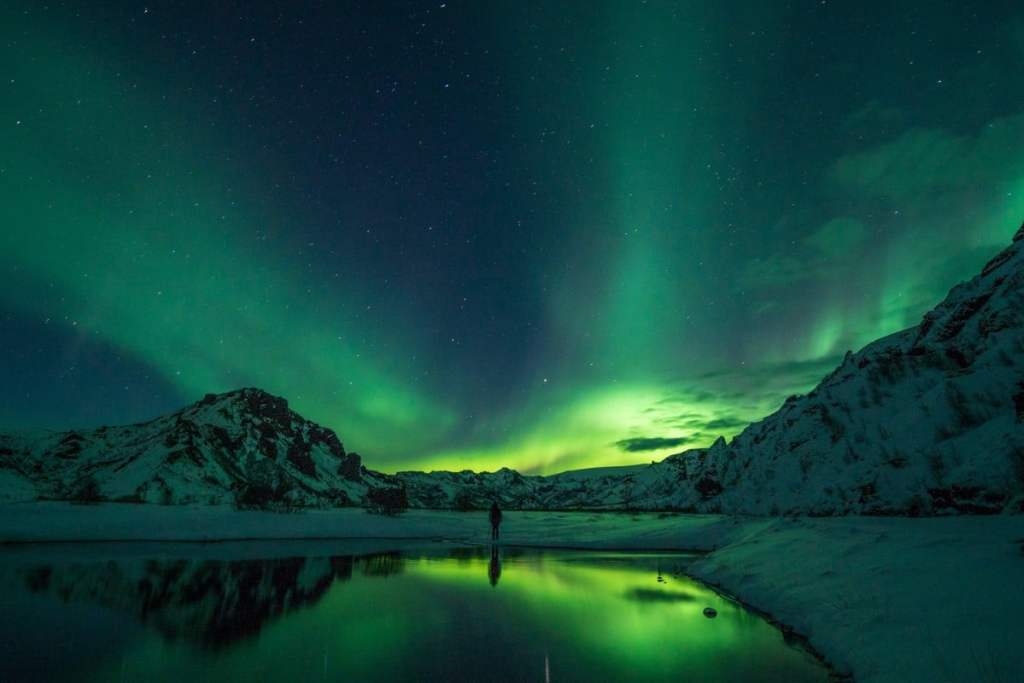
While technically the Northern Lights appear every night, that doesn’t mean the human eye can always spot them. For the best chance of seeing the Northern Lights, keep an eye out in winter when it’s dark in the northern hemisphere.
The darker the night sky and the further away from light pollution you are, the easier it is to see them. Not forgetting that weather conditions can also have an effect on your viewing experience. Luckily for you we’ve specifically chosen spots with the best chances of clear skies throughout the year. Keeping this Northern Lights forecast saved on your phone is always a good idea, too.
Best Places to see Northern Lights
Thingvellir National Park, Iceland
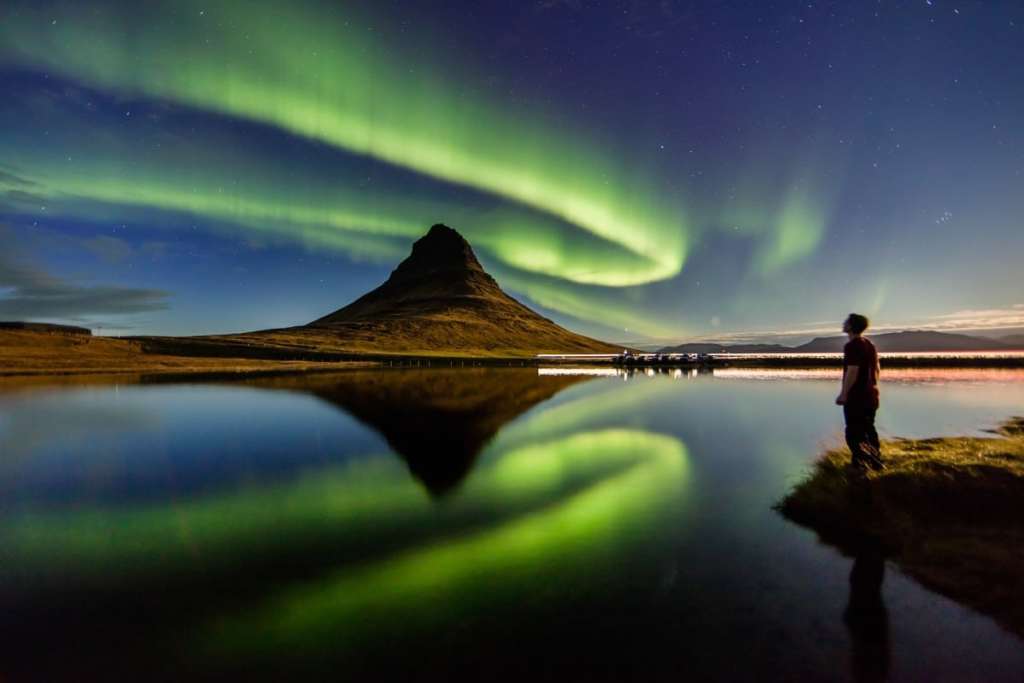
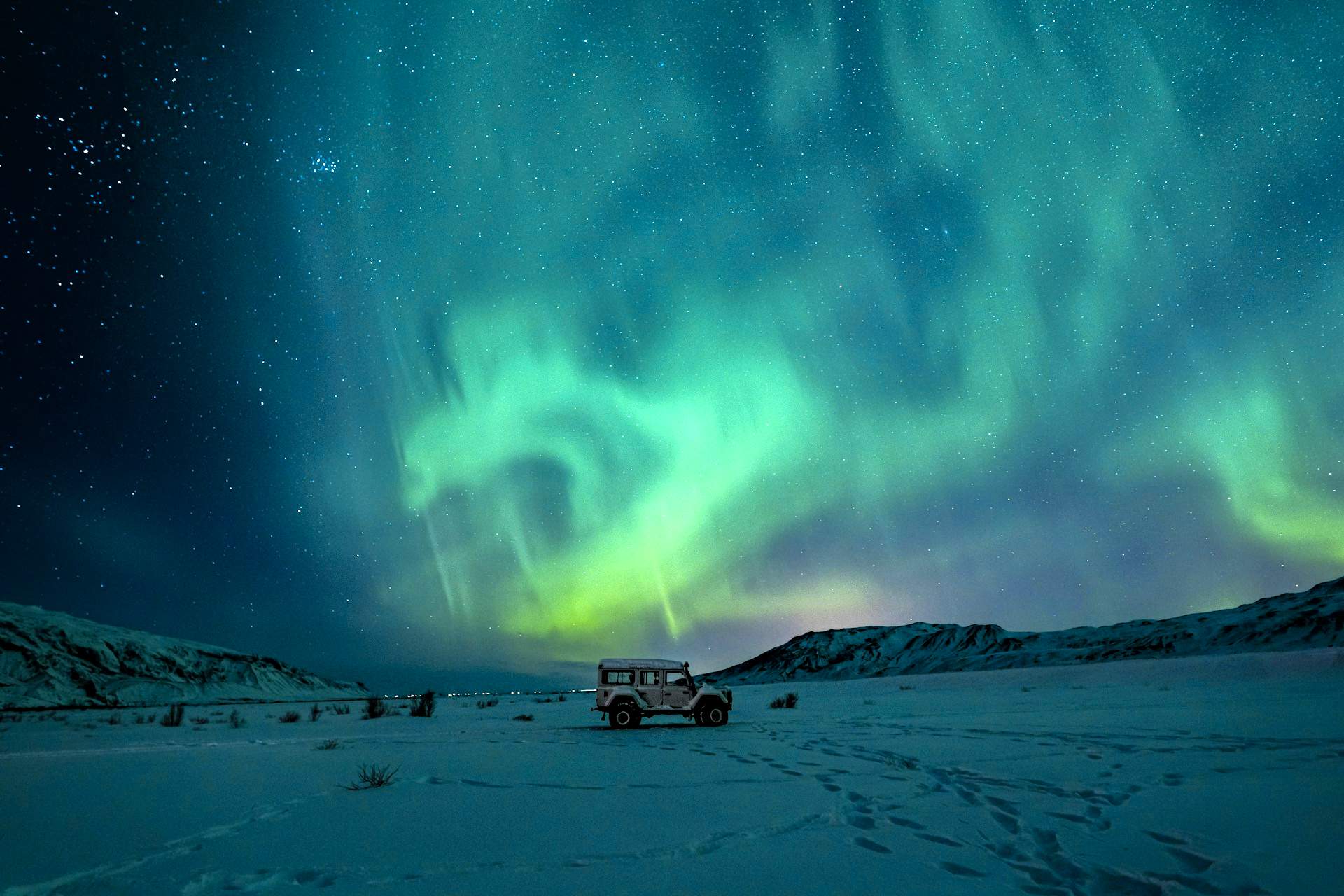
Possibly our favourite place to marvel at the Northern Lights, Thingvellir National Park’s skies are regularly illuminated by the phenomenon.
Determined to see the lights? The weather is milder in Iceland throughout spring and autumn, which means that there is less chance of cloudy skies and more chance of spotting the Aurora Borealis.
Though, it has to be said that this is when the majority of tourists visit the country in hopes of catching a glimpse of the colourful sky. It goes without saying that you should expect higher accommodation prices and busier attractions.
How to Get to Thingvellir National Park: The easiest way to travel to Thingvellir National Park is to fly into Reykjavik before making the 27 mile journey via a rental car.
We’ll warn you that travelling via public transport is pretty difficult (impossible) as you’ll need to take a bus to Reykjavegur / Reykjabyggð before hopping in a taxi the rest of the way. Alternatively, you can book a guided tour like this one that includes transport to and from the park.
Vik, Iceland
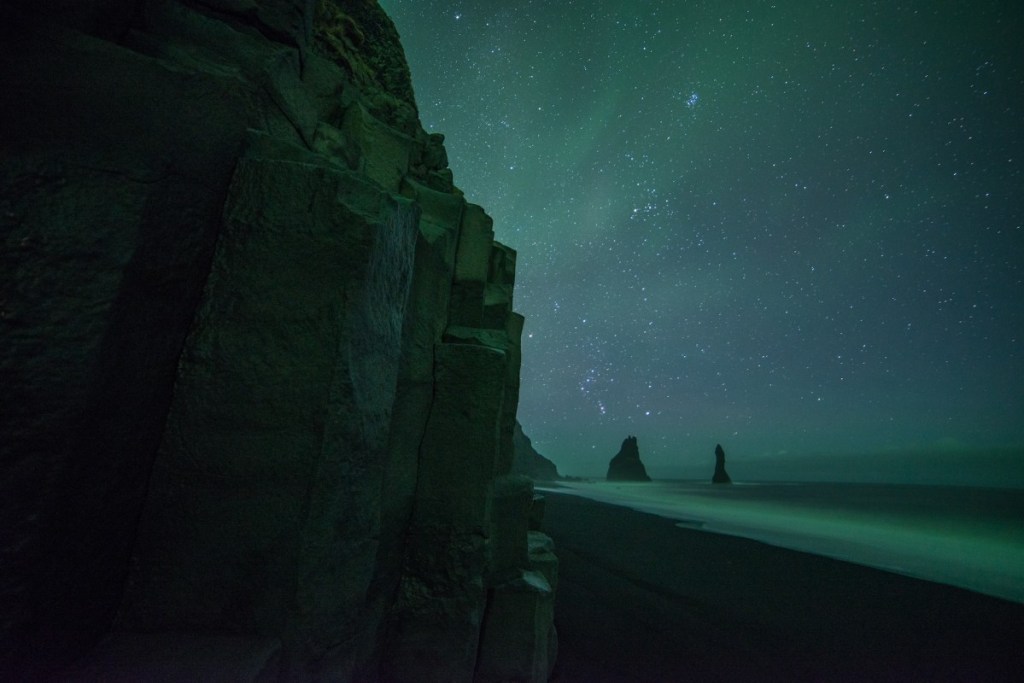
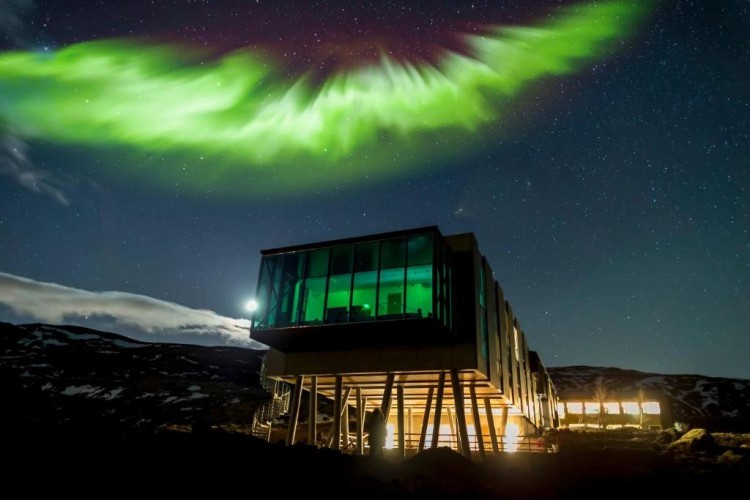
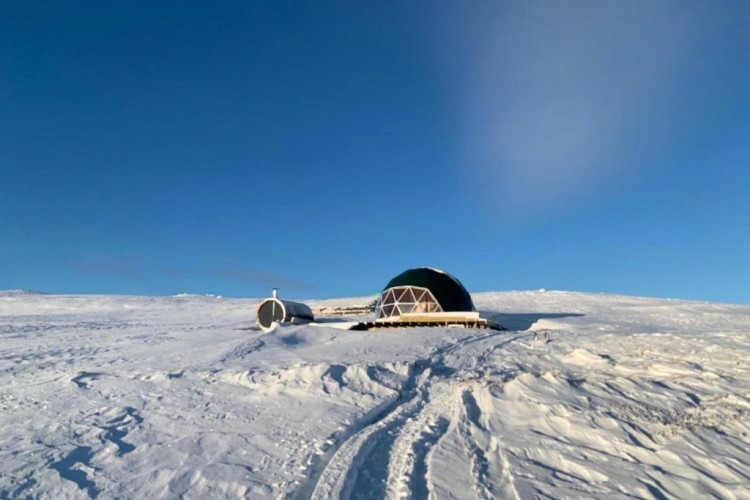
Vik is most famous for being the location of Iceland’s impressive black sand beaches. But you’ll want to stick around after the sun sets – this is when the skies in Vik come alive.
As Vik is the southernmost town in Iceland, you might need to plan a little bit harder if you’re dreaming of spotting the lights here. Fear not, though – head there throughout winter and it’s likely you’ll spot them during the night. Top places to perch and pray for a show include the majestic Reynisfjara Beach and the charming Vik I Myrdal Church.
How to Get to Vik: Again, when visiting Vik it’s likely that you’ll fly into the country via Reykjavik. From here you can either rent a car and drive to Vik, or it’s possible to hop on bus 51 via Selfoss.
Tromsø, Norway
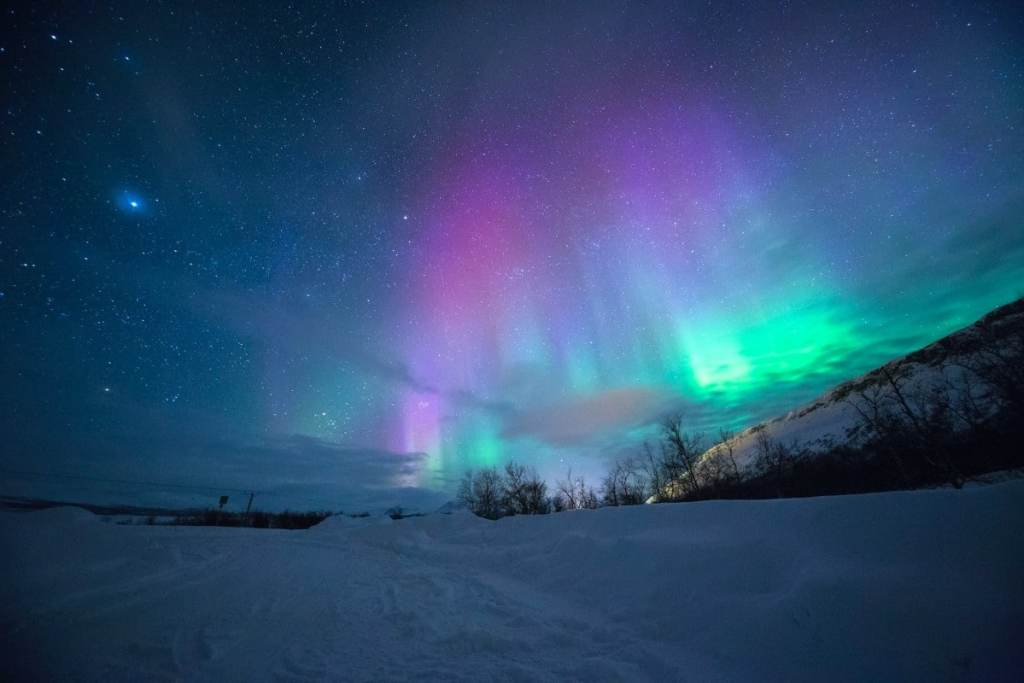
A classic Northern Lights-spotting destination, Tromsø is easily one of the most accessible places to see the aurora. Situated in the northern region of Norway, Tromso is more than 700 miles from Oslo.
Wondering when is the best time to see the Northern Lights? Well, in Tromso, you’ll want to visit between the end of September and April. Preferably between October and March for the best chance of spotting the lights. Better yet, you can book onto an Aurora Borealis bus tour to save you the hassle of chasing down the lights solo.
How to Get to Tromsø: There’s no easy way to travel to Tromsø by land – it’s a 20+ hour drive from the Norwegian capital and there are no trains. You’ll need to travel via flight, which takes around an hour from Oslo.

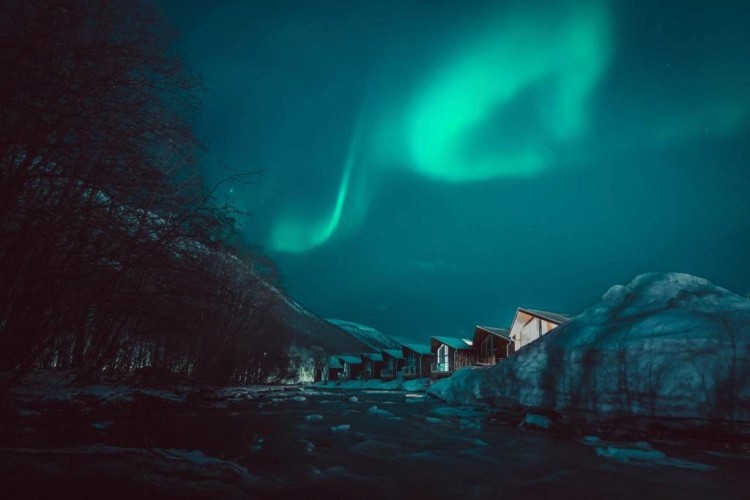
Alta, Norway
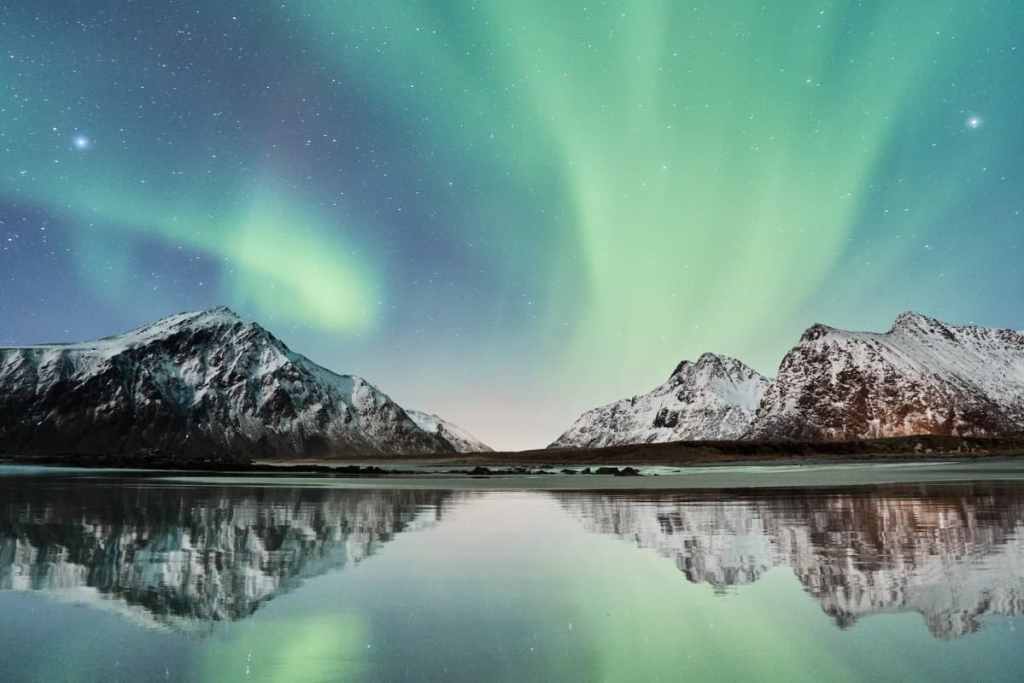
Alta likes to call itself the “Northern Lights City” – and, with a name like that, there’s a lot to live up to. Luckily, aurora spotting in Alta is pretty magical.
Tucked away in the northern fringes of Norway, Alta is home to the famous river as well as the Sorrisniva Igloo Hotel – we highly recommend popping in for an ice-cold drink or two.
But the Northern Lights opportunities are the main reason to visit the city. There are so many idyllic locations, but we love the hike to Komsatoppen, which sits just outside the city centre. Alternatively, you can head to Lathari, a beach nearby, for a completely unique experience.
Need a helping hand? This site is the most accurate for figuring out when to spot the Northern Lights in Alta.
How to Get to Alta: Alta is seriously north – which is why it’s one of the best places to see the Northern Lights. Getting there can be tricky, but we promise it’s worth taking two flights for. First, fly into Oslo, where you can then take a domestic flight to Alta’s airport.

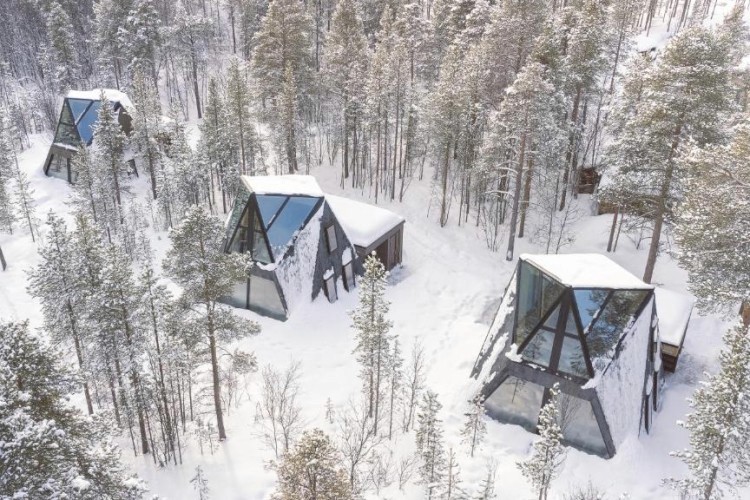
Rovaniemi, Finland
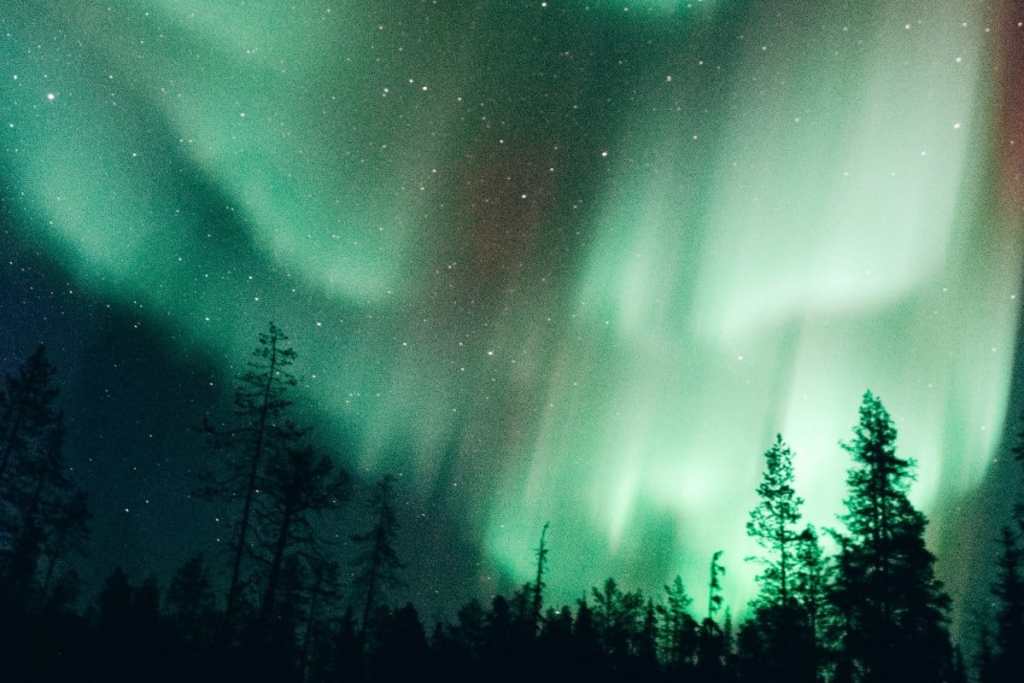
We’ve raved about Rovaniemi plenty of times before – you can read our handy guide to Lapland here – so it should come as no surprise that it makes it into our guide on where to see the Northern Lights.
In fact, Rovaniemi is blessed with around 150 nights of magical colour shows each year between late August and April. Head here in the depths of winter and it’s very likely you’ll be able to tick this off your bucket list. Our top tip? Take this Northern Lights car tour to make spotting the night sky phenomenon a breeze.
How to Get to Rovaniemi: The easiest way to get to Rovaniemi is to fly to Finnish Lapland. There are direct flights from many major airports around the world, though you can also fly to Helsinki and take a connecting flight from there.

Svalbard, Norway
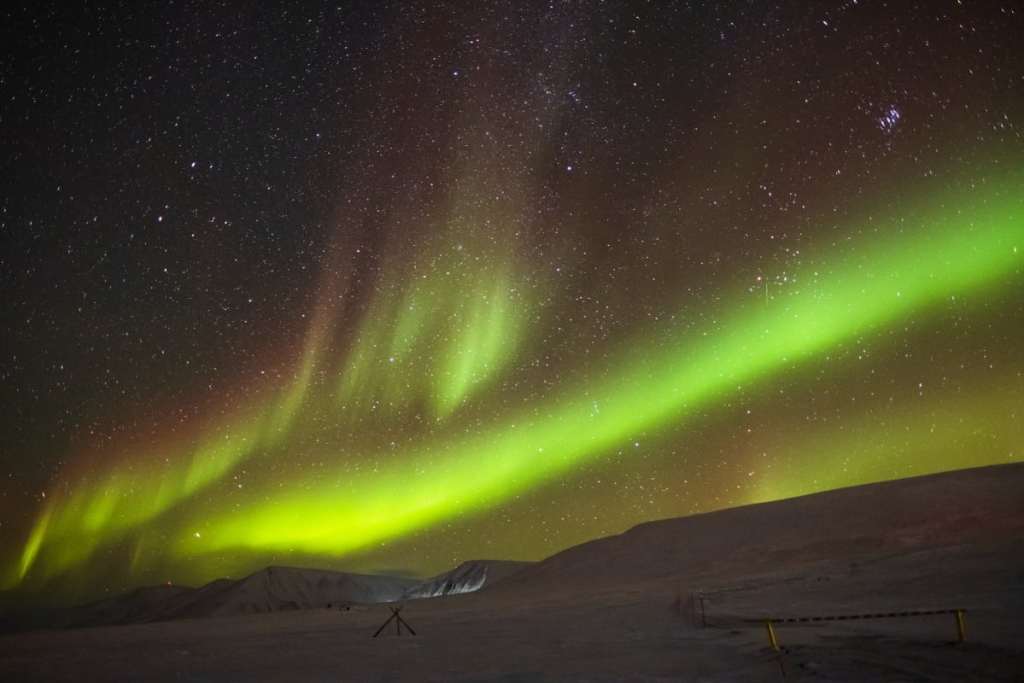
It should come as no surprise that this globe’s most northern year-round settlement is one of the best places to scope out the Northern Lights.
You also probably know that we love Svalbard and think it’s one of the coolest destinations on the planet. From exploring ex-Soviet settlements to dog sledding and ice floating, there’s so much to do.
The fact that you can often see the Northern Lights no matter where you are throughout the winter months is only a bonus.
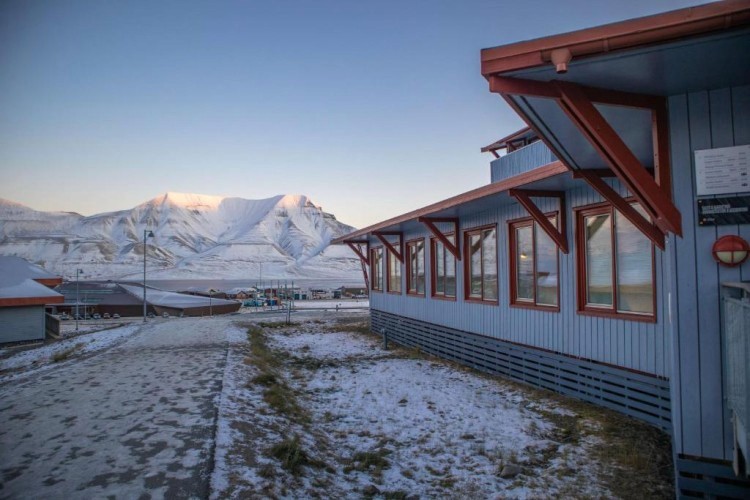
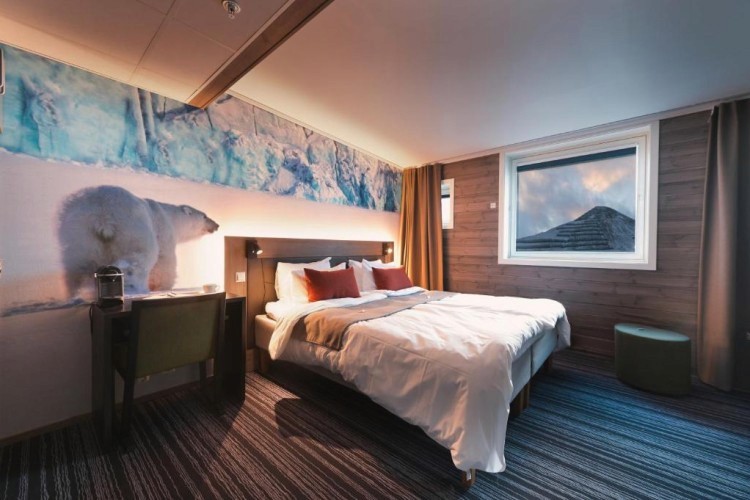
How to Get to Svalbard: You’ll need to fly to Oslo first and then take a connecting flight to Svalbard. The airport is just a five minute drive from Longyearbyen, where the vast majority of accommodation is situated.
Ilulissat, Greenland
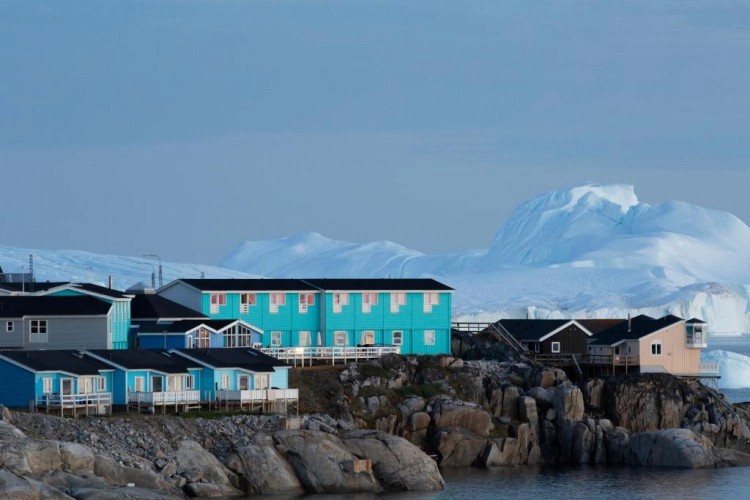
Ilulissat is one of the most popular tourist destinations in Greenland – mainly because of the impressive Ilulissat Icefjord but also because it’s one of the top places to see the Northern Lights.
While you can see the Northern Lights throughout the year, you’re far more likely to spot them if you visit between the end of September and March. Throughout the winter, there are many tours running in the area to help tourists spot them.
Remember, when you’re travelling around Ilulissat you will need to give way to dog sleds. No, we’re not kidding – there are signs everywhere warning you of this.
How to Get to Ilulissat: Fair warning, travelling to Ilulissat in Greenland is not for the faint of heart. You can only get there via Norway or Denmark, so you’ll need to fly into one of these countries before carrying on to Greenland.
Alternatively, you can choose to fly into Greenland (Nuuk would be our first choice) and take another flight from there. It’s also possible to get there via a cruise, though your options are far more limited.

Fairbanks, Alaska
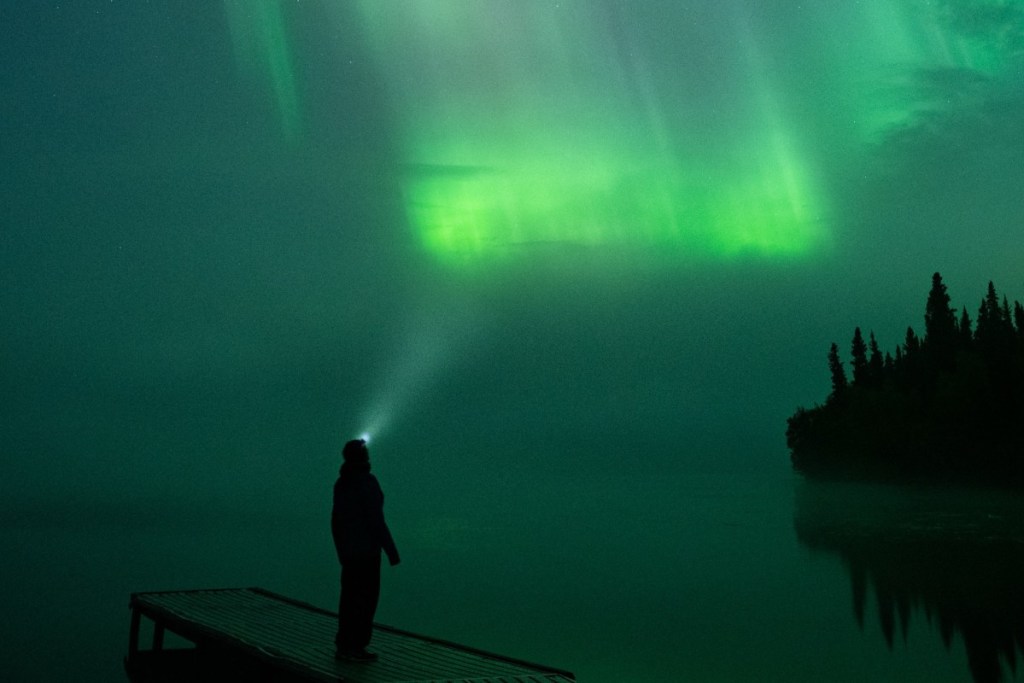
Head to the cosy Alaskan city of Fairbanks between August and April for the best chance of seeing the Northern Lights in the USA. Although, August to October is when we recommend visiting.
We’ll let you in on another little secret: There’s no better way to admire the Northern Lights than whilst soaking in natural hot springs. Chena Hot Springs Resort allows you to do just that. We think you totally deserve it.
How to Get to Fairbanks: The easiest way to travel to Fairbanks is by taking a flight to the local airport – which, FYI, usually results in a short layover at Seattle-Tacoma airport.

Abisko National Park, Sweden
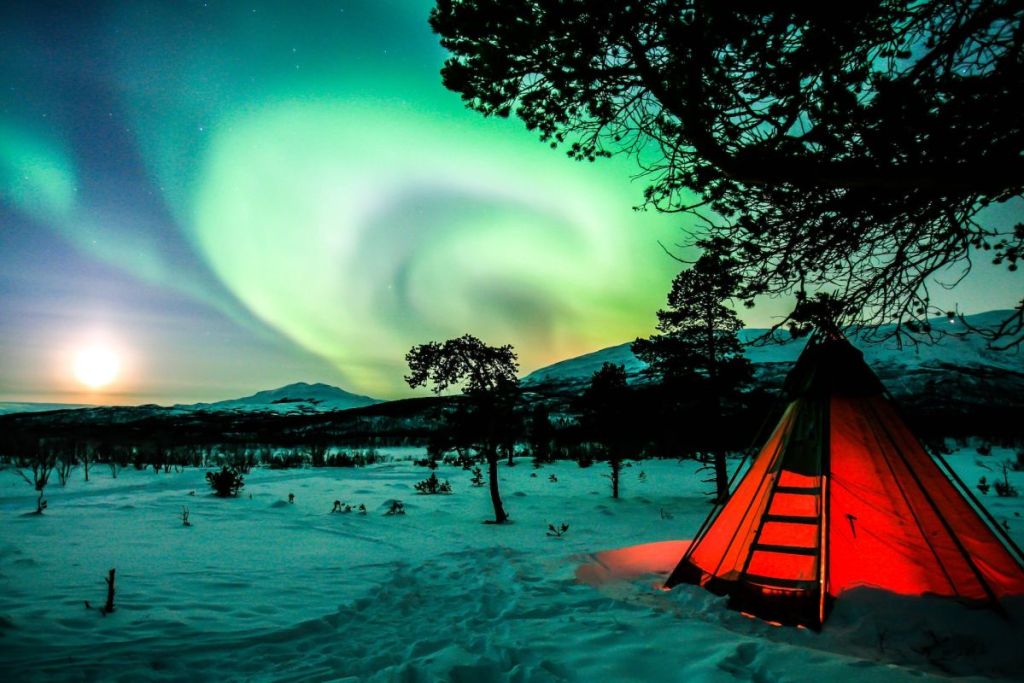
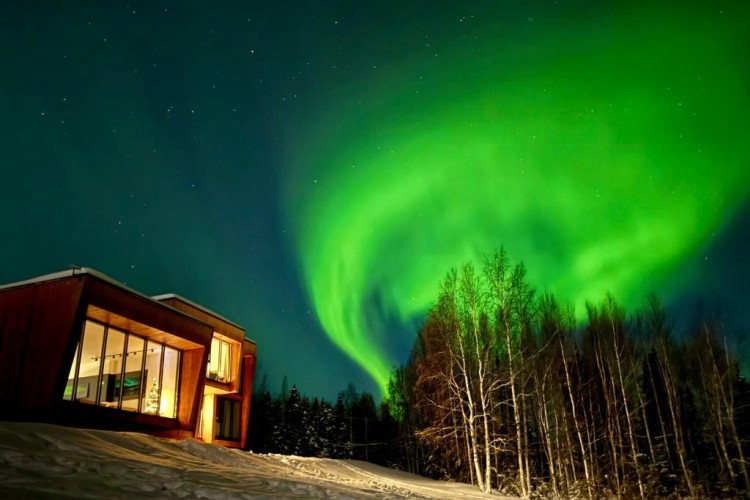
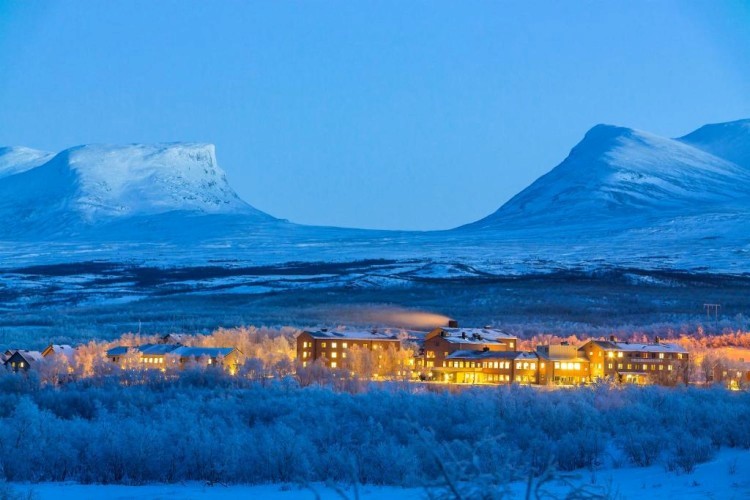
Wondering where to see the Northern Lights in Sweden? Abisko National Park is the answer. It’s a lengthy train ride from the Swedish capital, Stockholm, but it boasts plenty of accommodation options and natural beauty to boot.
As this is a national park, there’s minimal light pollution. And the microclimate means that it’s often clear in Abisko even when the surrounding areas are cloudy. Which means you have the best chance of spotting the Northern Lights from here.
How to Get to Abisko National Park: We’ll warn you: It’s a long night train ride from Stockholm to Abisko National Park (around 16 hours when direct), but it’s one that looks straight out of a movie.
Whitehorse, Yukon, Canada
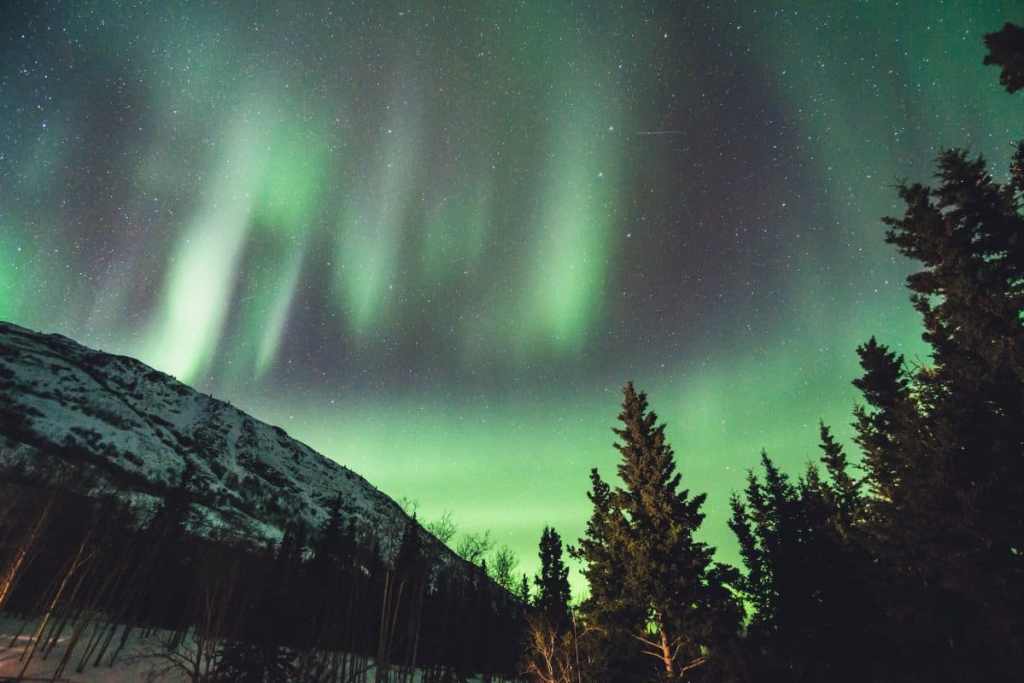
It’s no wonder that Whitehorse, which sits far north above Canada’s other major cities, is one of the best places to see the aurora.
Wondering exactly when the best time to spot the Northern Lights in Canada is? Although you’ve got a good chance of seeing the light show between mid-August and mid-April, the first few weeks of winter are your best bet in the Yukon region.
Psst… If you’re looking to stay in Yukon for a few days, we recommend heading to the Midnight Dome viewpoint in Dawson City – here you’ll be able to catch the Northern Lights from high above the Yukon River.
How to Get to Whitehorse, Yukon: When travelling to Yukon, you’ll need to fly via Vancouver. From here you can take a domestic flight to Erik Nielsen Whitehorse International Airport (YXY).

Yellowknife, Canada
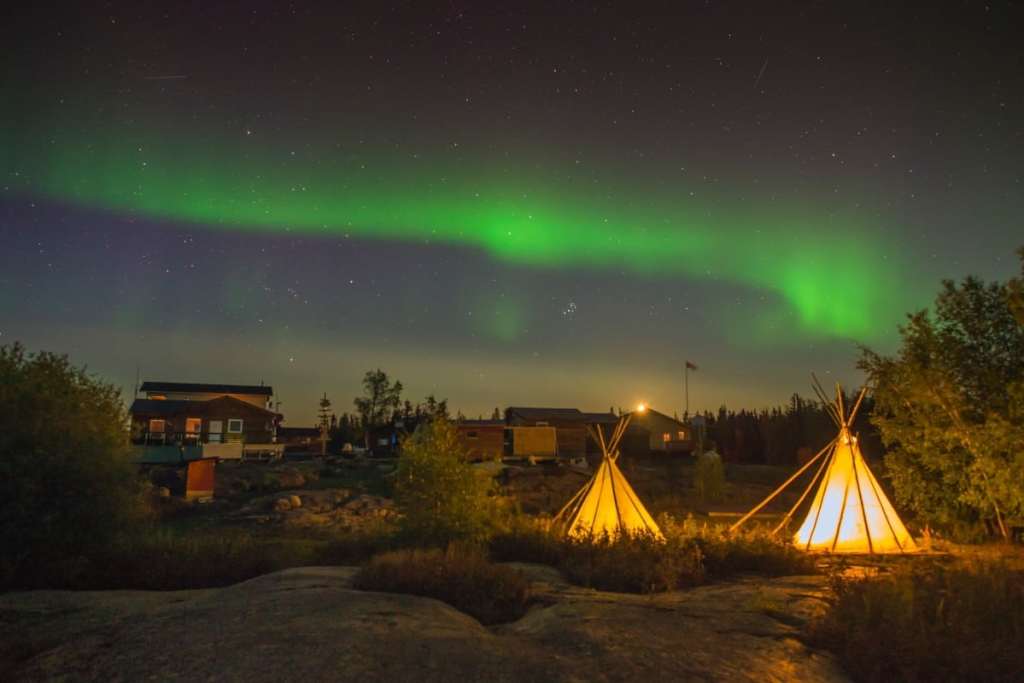
Yellowknife is one of the most popular Canada locations for Northern Lights-chasers, mainly because it’s fairly easy to access.
The image of the pastel lights dancing over Great Slave Lake is an iconic one. And Yellowknife is blessed with long, clear nights throughout most of the year. Though, visiting anytime after November and before April is ideal. Yellowknife is known for being one of the coldest places in Canada; make sure you wrap up ridiculously warm (the world swaddle comes to mind) when visiting.
How to Get to Yellowknife: Although easier to get to than most of the other locations on this list, Yellowknife is still seriously north. The only way to get there in reasonable time is to fly. You’ll need to catch a flight to Vancouver and then transfer to Yellowknife Airport.