
Visiting Nara Deer Park: A Sacred and Playful Oasis in Japan
Discover everything you need to know about visiting Nara Deer Park in Japan with our insider’s guide. Get ready to explore the top sights and tips you do not want to forget.
Nestled in the ancient city of Nara, the famous deer park is an unmissable destination. Nara Deer Park was at the very top of our Japan bucket list, so we knew we had to tick it off on a recent trip.
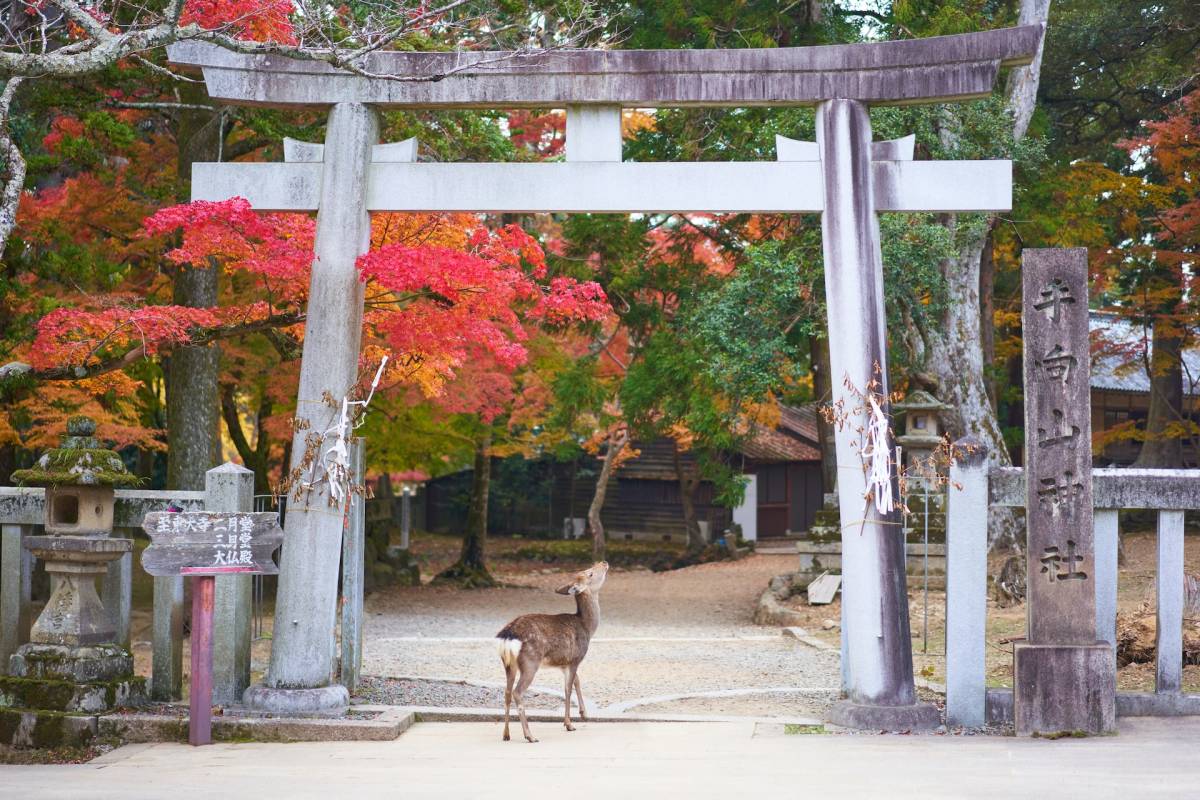
As you step into the park, you’re greeted by a rather unusual sight – hundreds of roaming deer freely wandering through the picturesque landscape. These graceful creatures, considered divine messengers in Shintoism, coexist harmoniously with visitors.
But there’s plenty more to Nara than just deer. Get ready to experience the park’s serene ambiance as you stroll along its tree-lined paths, surrounded by centuries-old temples and shrines.
But what should you know before you go? And are there any unwritten (or written) rules around interacting with these majestic deer? Don’t worry, we’re going to uncover all…
The History and Significance of Nara Deer Park
Nara Deer Park, known as Shika no Mori in Japanese, has a rich history that dates back over a thousand years. Established in 1880, it was the first public park in Japan and spans an impressive 502 hectares.
The park’s origins can be traced to the establishment of Heijo-kyo, the ancient capital of Japan, in the 8th century. The deer were considered sacred animals and were widely protected throughout this period.
According to legend, one of the gods of Kasuga Taisha Shrine arrived in Nara riding a white deer, solidifying the deer’s status as divine messengers. Today, the deer in Nara Deer Park are national treasures and protected by law.
The Majestic Deer of Nara Deer Park
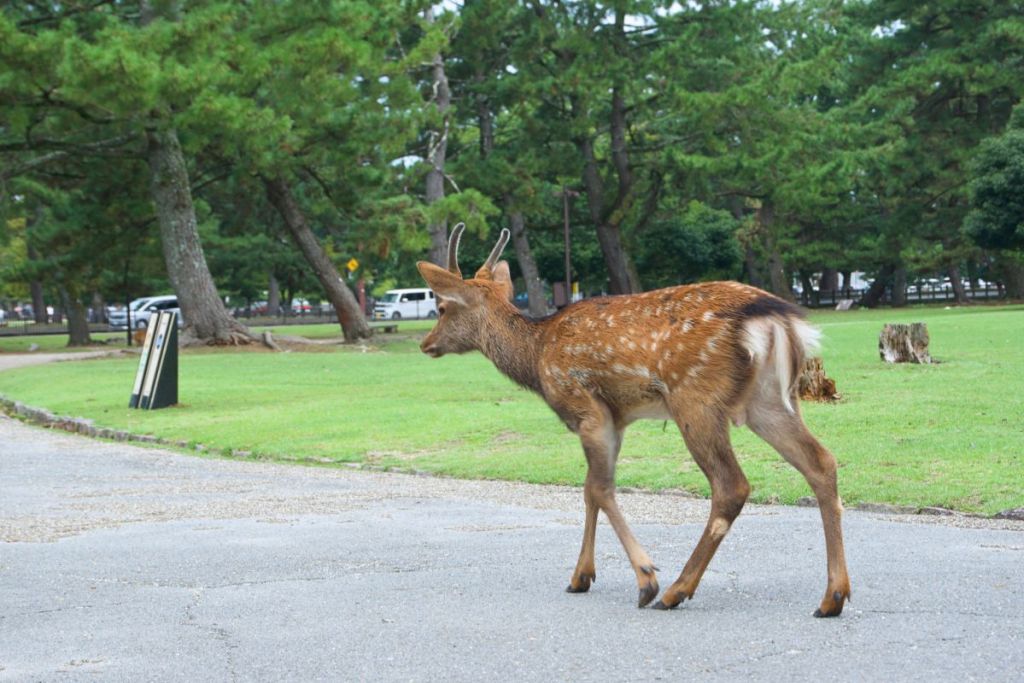
It goes without saying that the best reason to visit Nara Deer Park is for its resident deer population. These majestic creatures, known as “Nara’s Sacred Deer,” are Sika deer, a species native to East Asia. They are known for their graceful movements and gentle demeanour, even bowing in response to visitors.
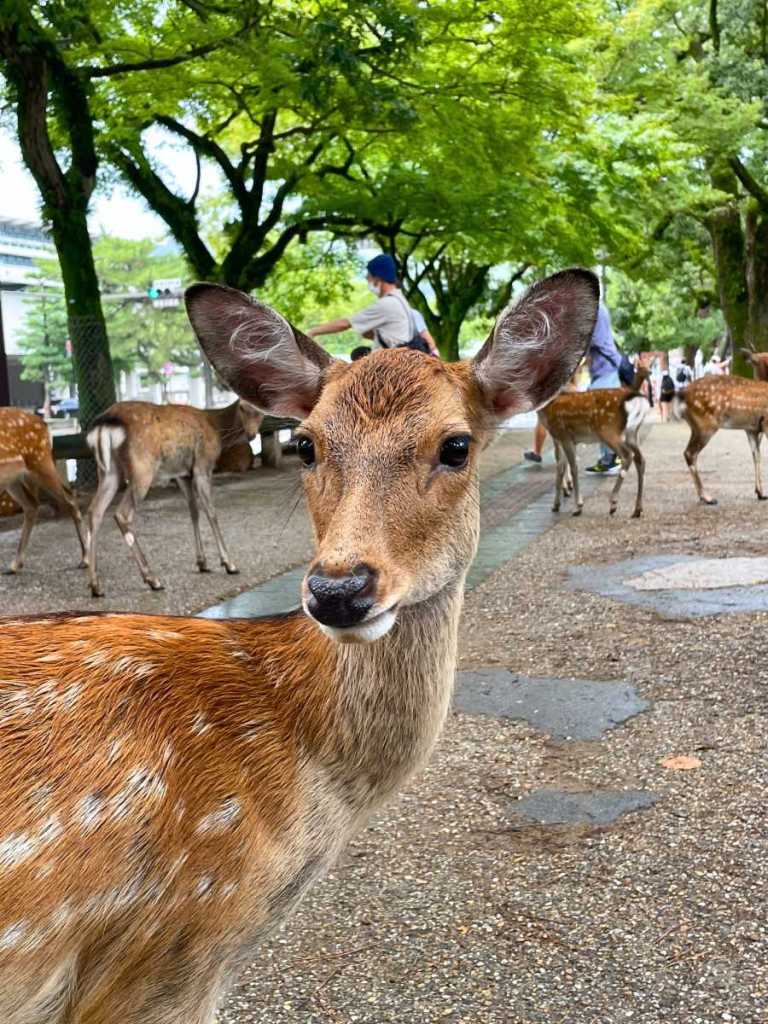
The deer in Nara Deer Park are accustomed to humans and have become a beloved symbol of the city. There are around 1,200 deer living in the park, and they roam freely throughout its boundaries.
You can get extremely close to them, just remember to be gentle if you stroke them and avoid approaching the baby deer, as their parents are extremely protective.
Our Experience of Nara Deer Park
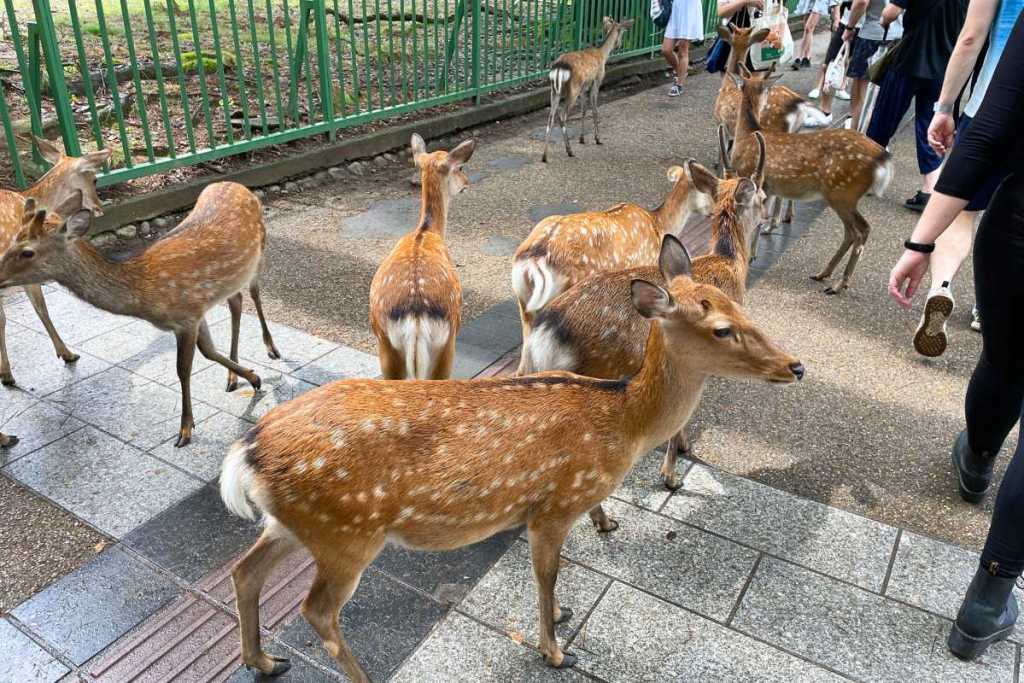
Be ready, there are deer EVERYWHERE in Nara Park.
We arrived bright and early in Nara, having taken the train from Osaka. It was easy to get to, though next time we will probably opt to stay in Kyoto instead. We chose to get the bus from the station to the park, though the walk back was stunning.
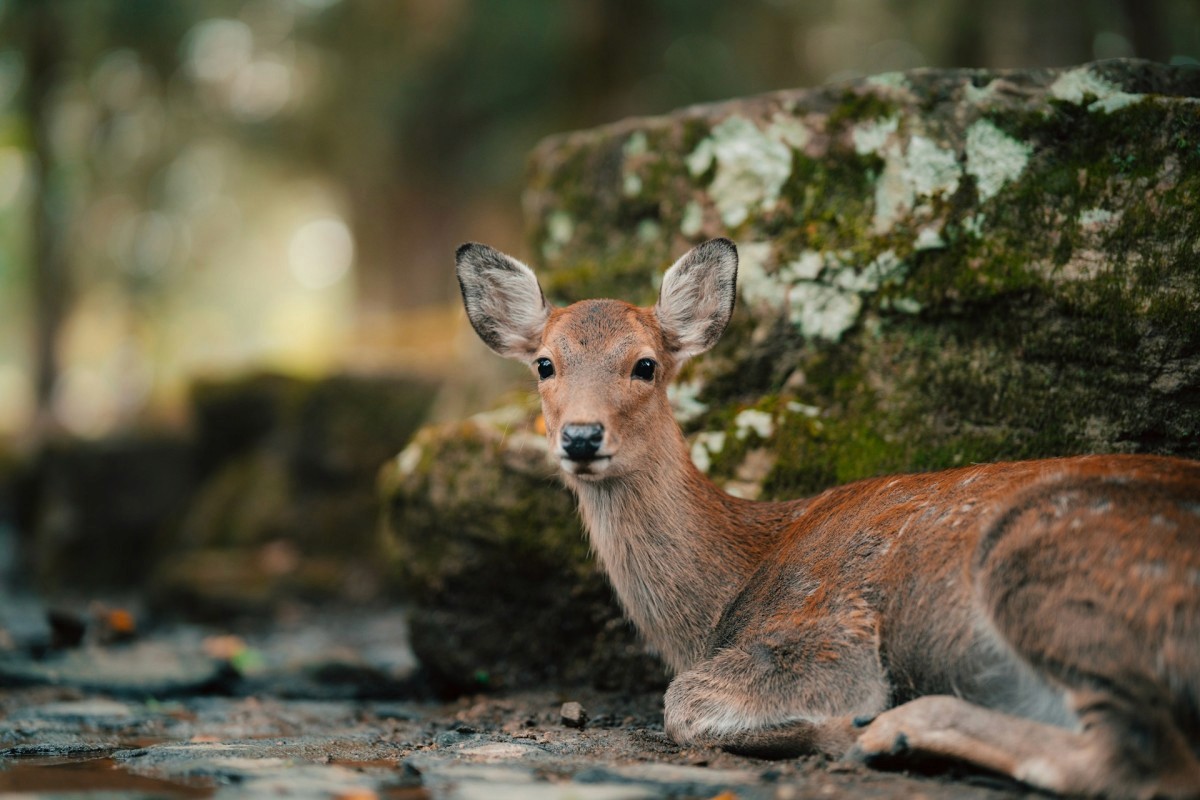
As soon as we stepped off the bus, we noticed the deers. They really are everywhere – sleeping in ditches, patrolling the pavements, and sniffing out the cracker stations. A couple of “park rangers” are dotted along the path surrounding the park (we say that lightly as, in reality, it tends to be old people wielding a warning stick to prevent the deers from running out into the road or down into the town.)
Feeding the Deer
For 200 yen, you can buy a packet of crackers to give to the deer. Aside from that, don’t bring any food and certainly don’t feed the deer anything else.
We’ll be honest – unless you have food, the deers really aren’t too fussed with humans. We managed to spend half an hour getting pretty close with the deers and taking some beautiful photos. As soon as somebody wandered by with food, though, it was game over. So we had to get some for ourselves.
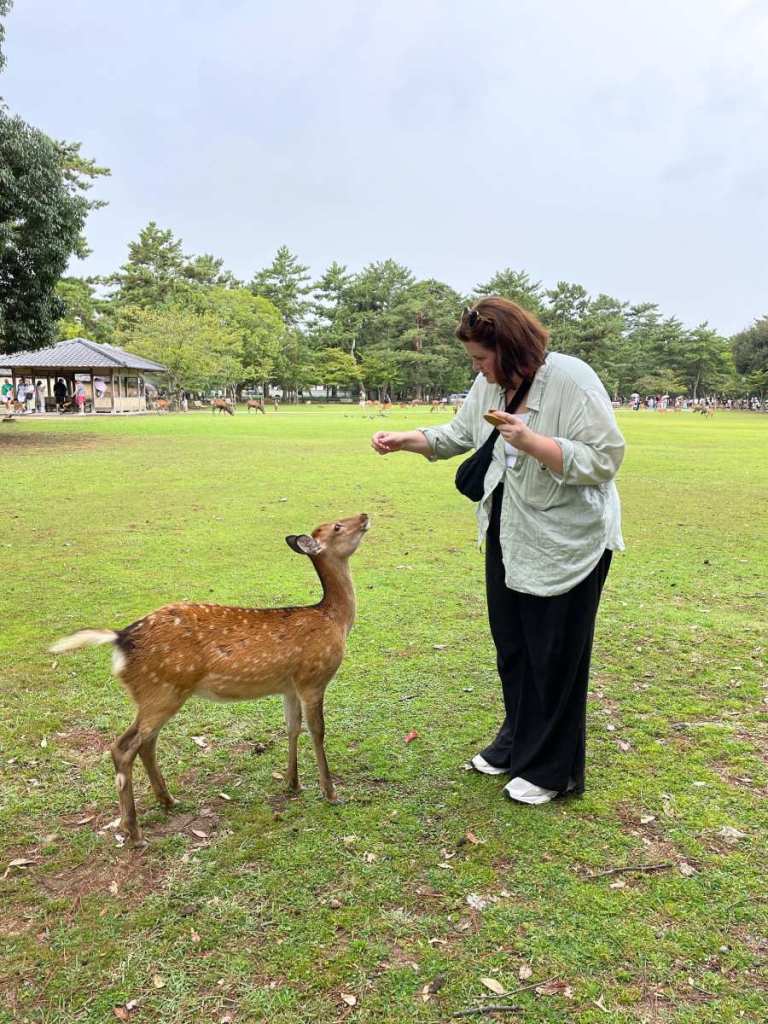
Buy crackers for 200 yen to feed the deer in Nara Park.
Armed with our packet of crackers, we made our way back over to the deer. It was a totally different experience. It’s important to be firm but swift with your feeding; at one point, a few deers surrounded us and kept nipping.
The minute we ran out of food, the deers retreated in search of crackers elsewhere. Cheeky.
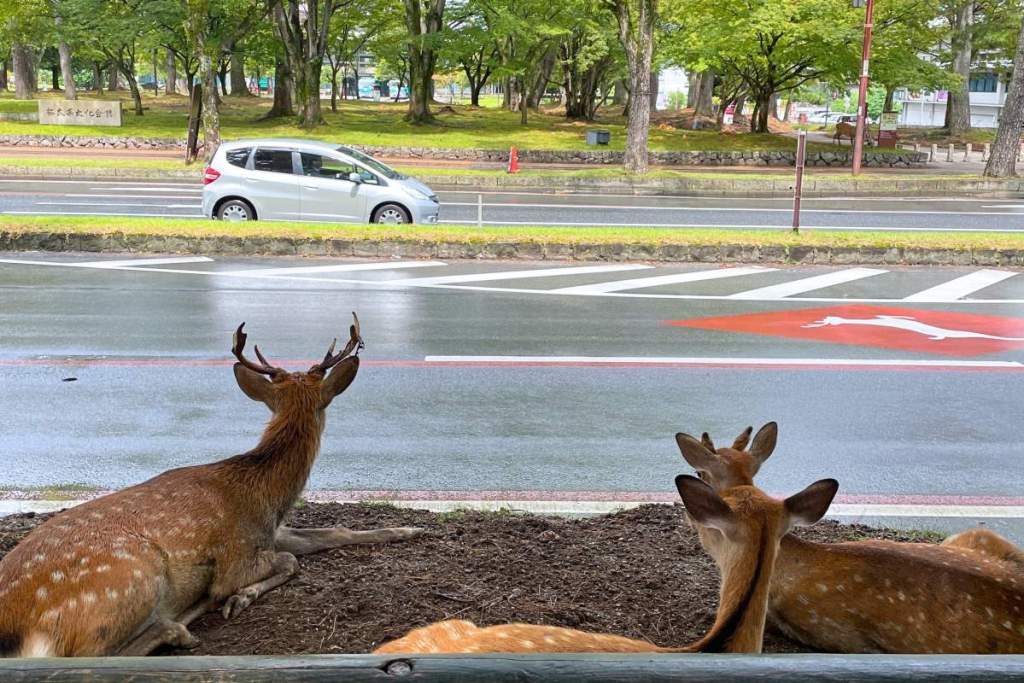
A top tip from us: head to the nearby Starbucks opposite the park for a coffee with an incredible view. The Starbucks is filled with deer memorabilia and we loved watching the deers playing and snoozing from a distance.
Attractions, Activities, Shrines, and Temples
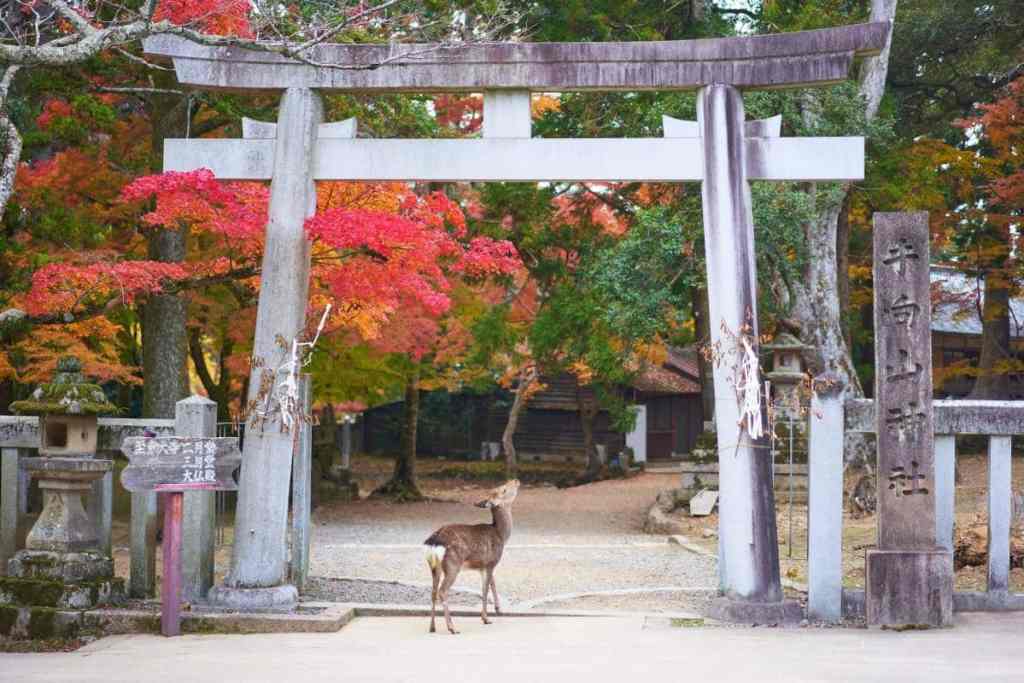
Explore Nara’s beautiful shrines.
You could easily spend a couple of days exploring the best of Nara Deer Park. Whether you’re a history buff seeking tranquillity or you really just want to see deer, there’s something for everyone to enjoy.
One of the park’s other main highlights is the Todaiji Temple, a UNESCO World Heritage site and one of Japan’s most iconic landmarks. This architectural marvel houses the Great Buddha Hall, which boasts the largest bronze Buddha statue in Japan.
Another must-visit attraction within Nara Deer Park is the Kasuga Taisha Shrine. Known for its vibrant red colour and intricate design, this Shinto shrine is a testament to the harmonious blend of nature and spirituality found in Nara. As you wander through the shrine’s pathways, you’ll be surrounded by hundreds of stone and bronze lanterns.
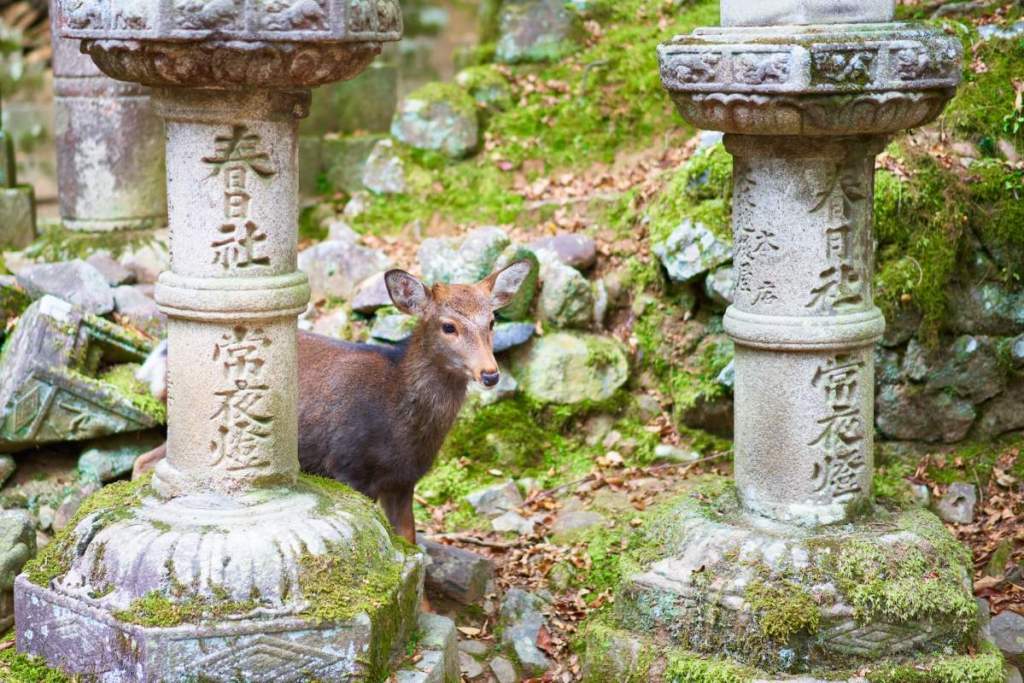
Spot deer amongst the ruins and temples located around Nara.
Nara Deer Park is home to several other temples and shrines that offer a glimpse into Japan’s rich cultural heritage. One such temple is Kofukuji Temple. This was originally established in 669 and became a significant religious centre during the Nara period. The temple complex consists of multiple buildings, including a five-story pagoda that provides breathtaking views of the park.
A gem we highly recommend you visit is the serene Isuien Garden. This traditional Japanese garden features meticulously landscaped ponds, bridges, and tea houses, and is based on the principles of harmony and balance, reflecting the Japanese concept of wabi-sabi.
Tips for Visiting Nara Deer Park
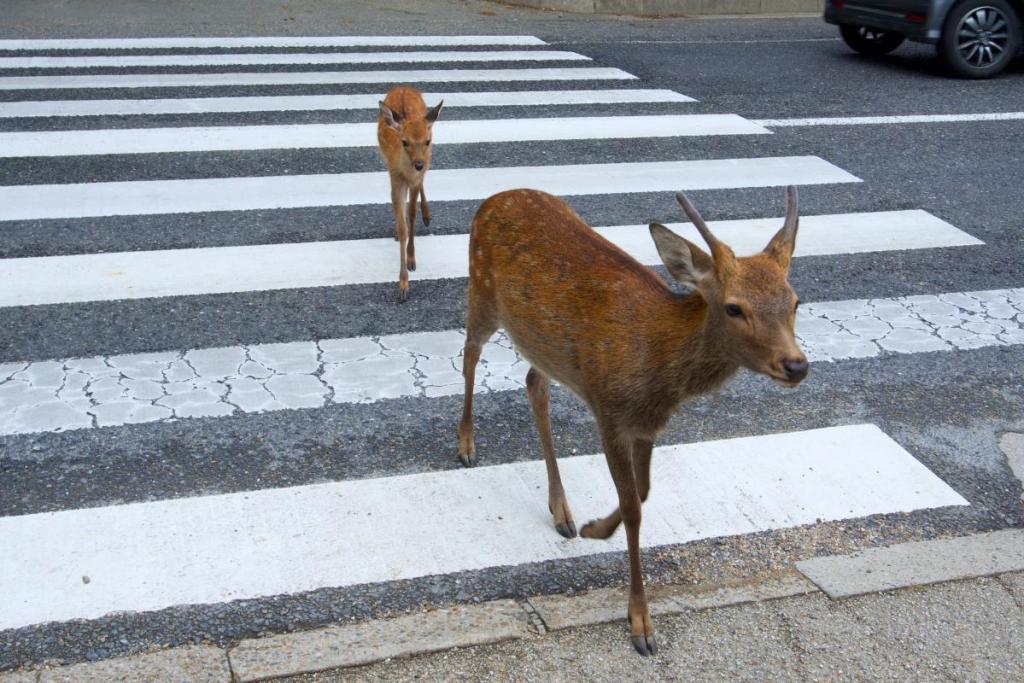
Deer crossing the road to get between the grassy areas of the park.
To make the most of your visit to Nara Deer Park, here are some insider tips to keep in mind:
Purchase deer crackers: Deer crackers, also known as “shika senbei,” are available for purchase throughout the park. Feeding the deer can be a delightful experience, but remember to follow the park’s guidelines and feed them safely.
Respect the deer: While the deer are friendly, it’s important to treat them with respect. Avoid pulling their antlers, chasing them, or feeding them outside designated areas.
Keep your belongings safe: The deer in Nara Deer Park are super curious and might try to nibble on bags, hats, or other loose items. Keep a close eye on your belongings to prevent any accidents.
Visit during weekdays: Nara Deer Park gets crowded on weekends and holidays, so visit on weekdays for a more relaxed experience.
Nara Park Deers: What to Know Before You Go
Nara Deer Park Entrance Fee
You’ll be happy to hear that Nara Deer Park is free to enter. That said, we recommend bringing 200 yen in cash to purchase some crackers – after all, it’s a once in a lifetime opportunity to feed the deers.
What Time Does Nara Park Close?
While Japan’s deer park is technically open 24 hours a day, the deers tend to retreat around 6-7pm. They head deeper into the surrounding forest to rest up overnight. We recommend visiting first thing in the morning, as it’s when the deers are at their most relaxed and the crowds are thinner.
How to Get to Nara Park
Nara Deer Park is easily accessible from major cities in Japan. If you’re coming from Tokyo, take the Shinkansen bullet train to Kyoto, then transfer to the JR Nara Line, which will take you directly to Nara Station.
If you’re already in Kyoto, you can take a direct train from Kyoto Station to Nara Station – the journey takes approximately 45 minutes. From Nara Station, it’s a short bus ride or a beautiful walk to the park’s entrance.
If you want the logistics to be taken care of, there are plenty of guided tours that depart from Kyoto and take you directly to Nara.
